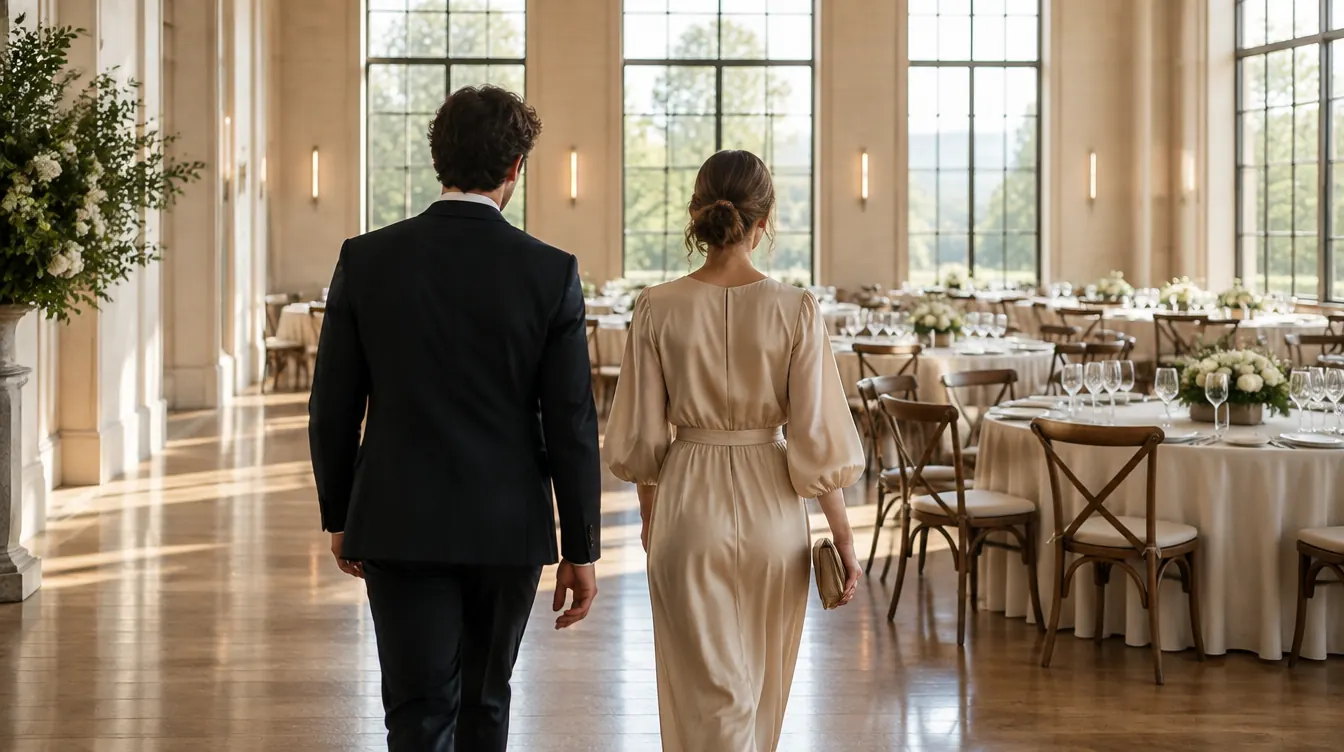
A venue tour that books is prepared, personal and ends with a clear next step. Learn what the client plans before they arrive, show the spaces in the order they will experience their event, answer price questions plainly, and leave with a date for the decision. The tour is not a performance. It is a conversation about how their event would work in your space.
How should I prepare before the tour?
Read the inquiry again, and prepare the tour around that client's event. Spend ten minutes on:
- The facts. Date, guest count, event type, budget range, who is coming on the tour. See how to qualify venue inquiries.
- The date. Confirm it is free, and know which nearby dates are open.
- The numbers. Have a draft price for their date and group size, based on your rate card and packages.
- The space. Walk the route first. Check that rooms are clean, lights are on and any set-up is tidy, and that nothing from another event is in the way.
- The paperwork. A one-page summary or proposal ready to send.
What order should I show the spaces in?
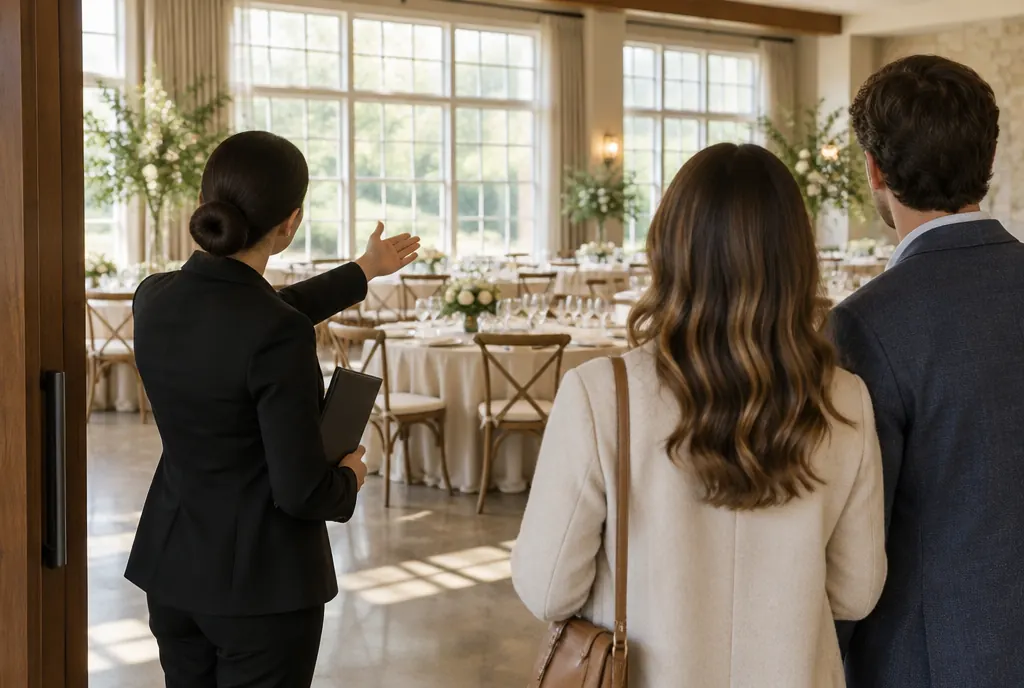
Show them in the order guests will meet them: arrival, the main space, the other spaces and the parts that make the event run. For a wedding that might be parking and entrance, ceremony, reception room, cocktail area, bridal suite and kitchen access. For a corporate event: arrival, registration, main room, break-out space and catering.
At each stop, say what happens there on the day, not just what the space is. "This is where your guests will arrive and have a drink while the room is reset" is more useful than a room name. Use real numbers: seats at the layout they asked about, which you can set using the venue capacity guide.
What should I ask during the tour?
Ask more than you tell. A few questions make the tour about their event:
- "What did you imagine for the arrival?"
- "Where do you see the dancing, or the speeches?"
- "What would worry you most about the day?"
- "Who else needs to see this before you decide?"
Listen for what they care about, and come back to it at the end. If they ask about something you do not offer, say so plainly and say what you do offer. Do not promise what you have not checked.
Sample quote
I write down one thing the client said on the tour and open the follow-up email with it. It shows I listened, and it reminds them why they liked the space.
 Priya RamanCatering & Sales Manager, The Halvorsen Hotel
How do I handle price questions?
Answer the question with a range and a reason, then offer the detail in writing. If you have a published rate card, you can walk through it. If the price is above their budget, show how it can change: a different day, fewer hours, a smaller package. The off-peak pricing planner helps you work out prices for slower dates before the tour. If you are asked to discount, offer a change in the product rather than a lower price for the same thing. Avoid improvising a number you have not checked against your costs; the profit margin guide explains how.
How do I close the tour?
End by agreeing the next step with a date. Summarise what you heard, say what you will send and when, and ask what the client will do next. For example: "I'll send the proposal for the 14th by 5 p.m. today. Would you like me to hold the date until Friday while you talk it over?" Offer a short hold with an end date, and explain what happens if someone else asks.
If the client is ready, say how to book: the contract and the deposit. Our guides to what goes in a rental contract and deposits and payment schedules cover the paperwork.
What do I do after the tour?
Send the proposal the same day with a short, personal note that refers to something they said. Then follow up if you have not heard back, with something new each time: a date still open, an answer to a question or an offer of a second visit. Record the tour and the outcome on the lead, so you can see over a few months which kinds of tours turn into bookings.
If you want to improve the step before the tour, the free Venue check looks at how easily clients can find and contact your venue.