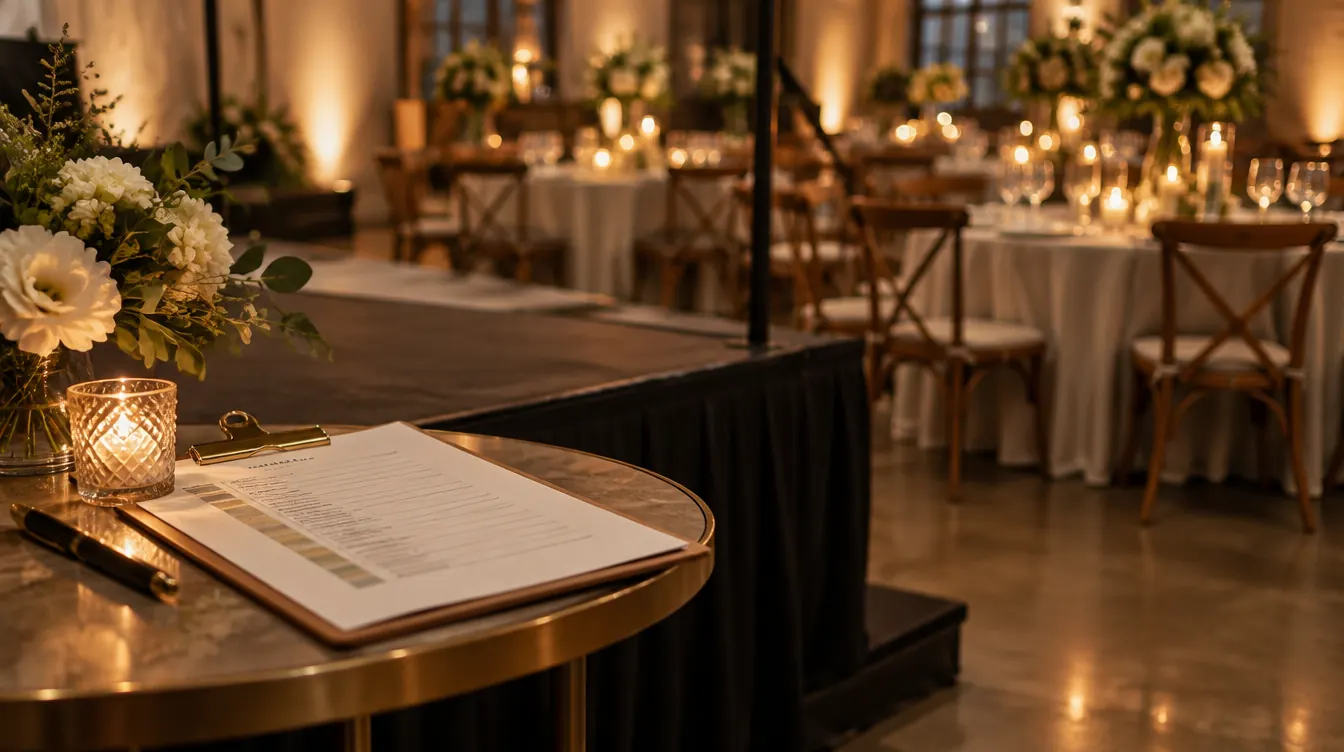
A run of show is the minute-by-minute schedule of an event day: what happens, at what time, and who is responsible for it. Venues, planners, caterers, bands and AV crews share the same one so everyone works from a single plan. It covers the day from the first vendor arriving to the last guest leaving.
What does a run of show include?
A run of show lists the segments of the day in time order, with enough information for each person to know their cue. For each row, include:
- Time: when the segment starts.
- Segment: what happens, in a few words, such as "Ceremony" or "Dinner service".
- Owner: the person or team responsible, such as the officiant, the catering lead or the MC.
- Notes: anything the owner needs to know, such as "Cue the band before doors open".
Add the event date, the venue and a contact number for the person running the day. A row can also carry a location, for example the terrace or the ballroom, if the event moves between spaces.
How is a run of show different from a BEO?
They answer different questions. The banquet event order says what the venue will provide: the room, the layout, the menu and the services. The run of show says when each thing happens and who does it. The BEO is about the plan for what the venue supplies, and the run of show is about the sequence on the day.
Keep them consistent. If the BEO says dinner is served at 6:20 p.m. and the run of show says 6:00 p.m., the kitchen and the band will each follow a different clock.
What does a run of show look like?
Here is an excerpt of the wedding template in the run of show builder. The times, notes and owners are invented examples, not recommended timings:
| Time | Segment | Owner | Notes |
|---|---|---|---|
| 14:00 | Band sound check | Band leader | |
| 16:00 | Guest arrival and seating | Ushers | Programs at the door. |
| 16:30 | Ceremony | Officiant | About 25 minutes. |
| 17:00 | Cocktail hour | Bar manager | Passed appetizers start at 17:00. |
| 18:20 | Dinner service | Catering lead | Courses as per the catering order. |
| 19:30 | Toasts | MC | Two microphones at the head table. |
| 22:30 | Last call | Bar manager | |
| 23:00 | Event ends; breakdown begins | Venue manager |
The builder has templates for a wedding, a corporate party, a conference day and a gala, plus a blank page. They are starting points. Change every time, note and owner to fit your event.
How do I build a run of show?
Work backwards from the end, then fill in the middle. This order tends to catch problems early:
- Fix the anchors. Doors, the start of the main event, dinner, the end time and the time the room must be clear. These come from the contract and the BEO.
- Add vendor arrival and setup. Florals, rentals, band, AV, caterer. Check each against your load-in rules and when the room is free.
- Add the moments that need a cue: the entrance, toasts, speeches, cake, last call.
- Name an owner for every row. A row without an owner is a row nobody does.
- Add buffers. Allow time for things to run late, especially after the ceremony and before dinner.
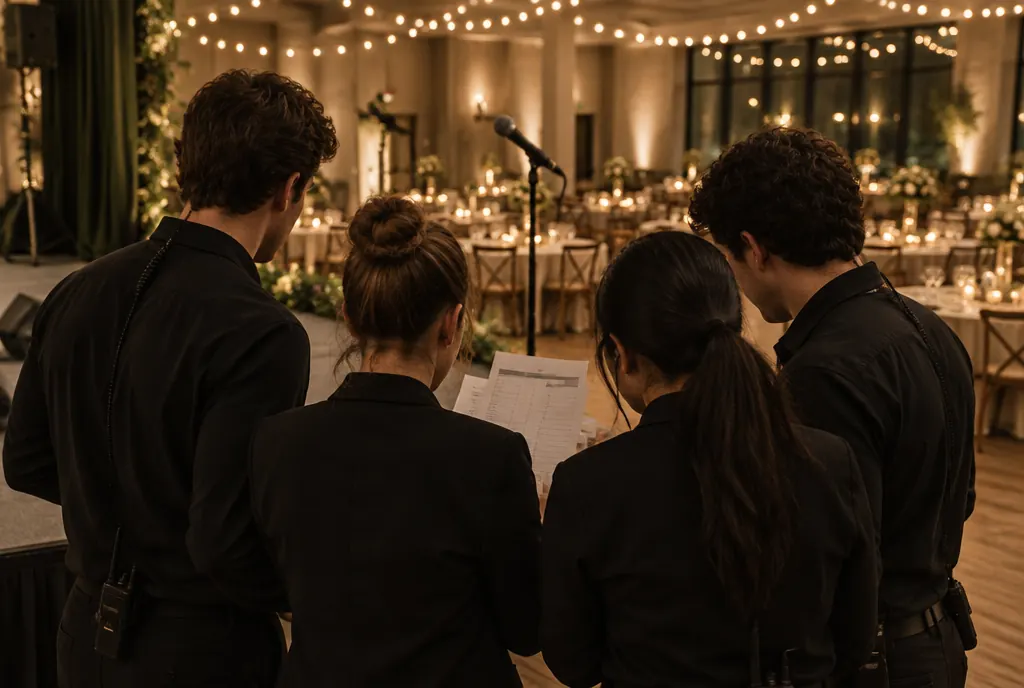
- Read it as each vendor. Does the caterer know when the first course goes out? Does the band know when to stop?
Check the times against the basics of the room. How many people can the space hold at once, and how long does it take to turn it between uses? The venue capacity guide covers the first question, and how many tables you need covers the layout.
How do I share and update it?
Send the final version to everyone with a row on it, and say who to contact if something changes. The builder produces a PDF, a Word file, or a calendar (.ics) file. The calendar file has one event for each row that has a time and a title, each running until the next timed row starts. The times are local to whoever opens the file, because the tool does not know your time zone. Import it into Google Calendar, Apple Calendar or Outlook.
A run of show here covers a single calendar day, from 12:00 AM to 11:59 PM. For an event that runs past midnight, make a second one for the next date.
On the day, keep a printed copy with the person who runs it, and tell the other owners when a time moves. A change that only the manager knows about is not a change.
Sample quote
The run of show is only useful if the bar, the kitchen and the band all read the same copy. We send one PDF and ask everyone to confirm they have it.
 Samir HaddadGeneral Manager, Alderwood Pavilion
What mistakes cause a run of show to fail?
- No owners. Nobody knows whose cue it is.
- Times that disagree with the BEO or the contract.
- Too much detail. If it takes five pages, nobody reads it on the day.
- Never sent. A schedule that stays on the manager's laptop does not coordinate anyone.
- No buffer. A plan with no slack runs late by the second item.
The builder keeps your schedule in your browser. It stores it on our side only if you ask us to email you a link. VenueDirector is in early access, and you can join the list on the home page. [REVIEW]